

ABC inventory classification has been around for so long that most planners just assume it is the only way to segment inventory. Spoiler alert: it is not. And it is far from the best way. This method hails from the 1960s, a time when computers were room-sized giants. Today’s tech can do so much more. Let us dive into how inventory management has evolved into multi-echelon inventory optimization (MEIO), helping companies minimize inventory investment while hitting service-level targets and improving profitability.
To understand why ABC inventory classification falls short, let us unpack how it works. Traditional inventory management applications calculate safety stock for each individual Item-Location (warehouse) combination in isolation. For such an application to work, the planner needs to assign a service level target (%) for every combination.
With companies often managing tens or hundreds of thousands, or even millions, of Item-Location combinations, it is impractical to set service levels individually. A simplification is necessary, and ABC classification is one way of doing it.
A common approach is to use a 3×3 matrix with volume value on the Y-axis and order lines on the X-axis, creating a “double” ABC classification. Typically, 80% of the volume value is assigned to A items, 15% to B items, and 5% to C items. The same 80/15/5 breakdown applies to the number of order lines. A few high-volume value items usually hit the 80% threshold of the AA category quickly, leaving most items in the CC category.
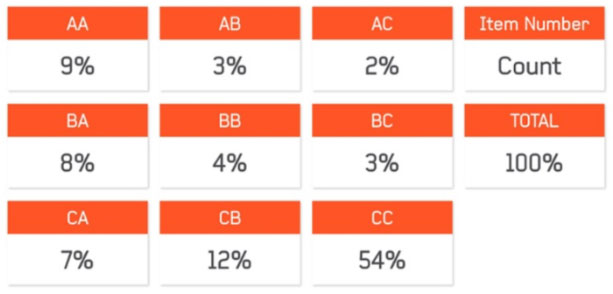
Service levels are then assigned to each ABC class through a “trial-and-error” process. The AA class typically gets the highest service level targets, and the CC class gets the lowest.
If the aggregated service level doesn’t meet the company’s overall target, say, 95.0%, adjustments are made to the service level targets per class. Once the settings are in line with, or slightly above, the company´s overall target, 95.5% in this example, the process stops.
Now every item in each ABC class shares the same service level target. For example, if there are 10,000 stocked items in a location, all 5,400 items (54% from the ABC classification example above) in the CC class will have the same target. Safety stock levels can then be calculated.
Now, let us pause and think for a moment.
The stock investment depends on the service levels set for each ABC class. Could other service level combinations achieve the same 95.5% result? Absolutely. There are countless combinations that could give the same 95.5% overall service level, all with different stock investments.
So, how do we know if our chosen assignment of service level per ABC class is optimal? We don’t. That’s why we call it inventory management – not inventory optimization.
The example above describes one level, but supply chains are often more complex, with multiple levels/tiers (central, regional, and local warehouses). Some traditional inventory management software uses an 8×8 ABC matrix for each location. With many locations, setting up and maintaining this system can become a very labor-intensive task. And we still can’t be sure if we have the optimal set-up.
So, is there a better way to segment items, assign service level targets, and optimize safety stock levels today? Yes, there is.
While traditional ABC classification focuses on operational logistics, often ignoring sales, marketing, and customer needs, inventory optimization looks at the product range and the business.
This modern approach uses “Service Classes,“ for example, “Accessories”, “High-margin products”, “own-brands”, and “Critical spare parts”. This categorization is more relevant to sales and marketing, who might not even understand ABC classification.
In inventory optimization, you set service level targets per service class, not ABC class. The software optimizes each Item-Location’s service level and safety stock level using a “stock-to-service” curve. This ensures that you meet the aggregated service class target but with minimal stock investment. Let´s think about this. Using the ABC approach, all items in a class are assigned the same service level as an input. In inventory optimization, the software optimizes the individual Item-Location service level, this is an output,

This automated differentiation of service levels (known as mix optimization) within each service class, considering lower bounds, is an outstanding way to reduce stock investment and increase service level at the same time. For example, “Accessories” might have an overall target of 93%, with a lower bound of 90%. The software then assigns service levels between 90% and 99.99% in such a way that the service class still reaches 93% as a group but with minimum stock investment, i.e. optimization. Similarly, “Critical spare parts” may target 99.5%, with a lower bound of 99.0%, still giving the system some level of freedom in the mix optimization step.
The result? Each item in each location is optimized individually but in relation to all other items in the same service class and in relation to upstream and downstream locations (known as Multi-Echelon Inventory Optimization, MEIO). Actually, they compete about the stock investment among each other you could say. In inventory management, items are treated as isolated entities. Inventory optimization software models tens of variables such as demand variability, standard cost, order quantity, lead time, lead time variability and more – unmanageable with the traditional approach.
Modern inventory optimization automates the planning of complex supply chains with hundreds of thousands of Item-Location combinations, guaranteeing service levels with minimum stock investment. This is all done with a very limited number of planners.
Are you still relying on old inventory management methods? Transform your inventory strategy today with cutting-edge inventory optimization tools. Say goodbye to outdated ABC classification and hello to smart, efficient, and cost-effective inventory optimization.
In today’s fast-paced business landscape, optimization is key, especially in supply chain. With the right system in place, companies can boost efficiency and ultimately drive greater success. Yet, rolling out a new supply chain planning system is a complex task – and pushing that button can feel quite daunting. To pave the way for success, here are 7 tips to help you go live with your new supply chain planning system.
There are many reasons for implementing a new advanced supply chain planning system. While some companies want to reduce tied-up capital and improve agility, others want to optimize inventory levels and refine forecasting processes.
In an increasingly turbulent world, businesses are also looking to invest in more robust systems to mitigate risks and increase operational resilience. They want a flexible solution that can navigate the rapid changes of the global landscape and offer security.
There is also a growing demand for automation among businesses that rely on manual data entry and individual expertise. These businesses want to move away from a high-risk, people-dependent set-up to a more process-driven approach that enables growth and scalability without personnel dependency.
Are you one of those companies, eager to adopt a future-ready solution, yet cautious about ensuring a flawless launch on the scheduled date?
To pave the way for success, here are 7 tips to help you go live with your new supply chain planning system.
When implementing a new supply chain planning system, it is crucial to establish goals that clearly articulate what you aim to achieve with it. These goals should be specific, quantifiable, and measurable so that you can track progress over time. They should address specific pain points or areas of improvement within the supply chain that are aligned with your organization’s strategic priorities. Setting clear goals also makes it easier to communicate the purpose and expected outcomes to your organization. Also establish a timeline to create a sense of urgency and accountability. This will help you focus efforts and ensure timely progress towards implementation milestones.
The design phase of a new supply chain planning system lays the foundation for its success in many ways. It is during this stage that key decisions are made regarding system architecture, functionality, and user experience. While it may seem tempting to leave the design solely in the hands of experts, getting involved early on is important for understanding how the new system works, ensuring it meets your organization’s needs, and taking part in the decision-making process. Even though you may have experts handling the technical aspects of the system design, it is essential for you to take ownership of the process. By doing so, you not only increase the likelihood of successful implementation but also foster a sense of buy-in among the users in your organization.
In the journey of implementing a new supply chain planning system, effective change management is essential for success. The impact of this transformation usually extends beyond the project team, often including finance, sales, sourcing, and procurement, either directly or indirectly. Identifying key people and engaging them is critical for project success, especially in addressing sceptics and dissenters. Winning over these hesitant voices can serve as a catalyst for internal project advocacy. Once convinced, you will often find that these people evolve into project ambassadors, championing its cause.

Ensure you allocate enough time for testing and validating your new supply chain planning system. This process will help identify and address potential issues before going live, facilitating a smoother transition. Address all potential challenges and uncertainties right from the start. Run both systems – your existing and the new one – simultaneously to carefully examine any differences. Compare and analyze the results to uncover underlying reasons for discrepancies and use feedback from pilot testing to make necessary adjustments and improvements. This proactive approach will establish a robust foundation and mitigate risks as you proceed with the implementation.
While striving for excellence is important, it is essential to acknowledge that achieving absolute perfection is unrealistic. Understand that there will always be corner cases, exceptions, and unforeseen challenges. Embrace this reality and adopt the 80/20 rule: focus on addressing the most critical aspects that will have the greatest impact. Be prepared to address issues as they arise, using a proactive approach to correct any discrepancies. It is crucial to prioritize the optimization of systems for the majority rather than clinging to outdated ones. The effectiveness of any system should be measured by its ability to improve overall functionality for the majority. Striving for adequacy ensures steady progress while maintaining flexibility to address emerging challenges.
It is easy to fall into the safety net trap. However, after thorough testing and validation, it is crucial to recognize the pivotal moment: the decision to transition to the new supply chain planning system. Summon the courage to push that button and go live! While it may seem daunting, remember that after investing considerable time, money, and resources, proceeding otherwise would be a financial misstep. By initially keeping the old system in parallel, you will have a contingency plan, in case of any unforeseen issues.
When rolling out a new supply chain planning system across multiple countries, begin with the market most receptive to change. By allowing them to lead by example and create an early success story, you instill motivation and interest in other markets to transition to the new system. Start the deployment there and then gradually expand to the other markets. This is an effective strategy for promoting the new system internally across your global organization. This approach also acknowledges and empowers the individuals involved in adopting the new system, highlighting their achievements.
Are you ready to adopt a future-ready supply chain planning system and eager to ensure a flawless launch on your planned schedule? With a track record of over 1,000 successfully completed projects and a 30-year integration heritage, Optilon is a trusted partner in supply chain optimization. From technology selection to seamless implementation, integration, and ongoing support and insights, we are committed to accompanying you every step of the way on your supply chain journey.
Book a meeting today with one of Optilon’s supply chain experts.
Are you struggling with balancing inventory? Today, many Nordic businesses face major challenges in matching their inflated stock levels and assortment of products with changing customer demands. The quest to maintain a high service level while minimizing costs remains a top priority, although now it seems more difficult than ever. Fortunately, smart supply chain planning can unleash the potential of your inventory and pave the way for supply chain success.
In the midst of a global pandemic that profoundly disrupted the global supply chain, our current macroeconomic landscape has taken shape. With significantly reduced shipping capacity and prolonged lead times from Asia, businesses faced the challenge of meeting customer demands by placing substantial orders to stock up on inventory.
Fast forward a few years, and we now find ourselves grappling with high-interest rates and inflation. These economic forces have propelled a significant change in consumer behavior. Consumers are now favoring more affordable products over their pricier counterparts. Consequently, businesses have also adapted their supply chain strategies, stocking more inexpensive items to cater to these changing customer needs.
This shift, however, has unwittingly given rise to a particular problem – the overstocking of higher-priced items. The current product mix is simply mismatched and does not align with the new customer needs. This is now causing large financial strains on businesses.
Previously, when interest rates remained low, companies focused on providing a high service level, and they could maintain extensive product inventory without incurring significant costs. Now the scenario is vastly different. Obtaining desired stock has become increasingly expensive, and the bottom line is directly impacted by percentages.
To cope with this, many businesses find themselves resorting to significant discounts to reduce their inventories, or they simply hit the brakes in an attempt to handle the situation. However, this scenario may eventually lead companies to face a “bullwhip effect”, resulting in empty shelves and disorganization throughout the supply chain.
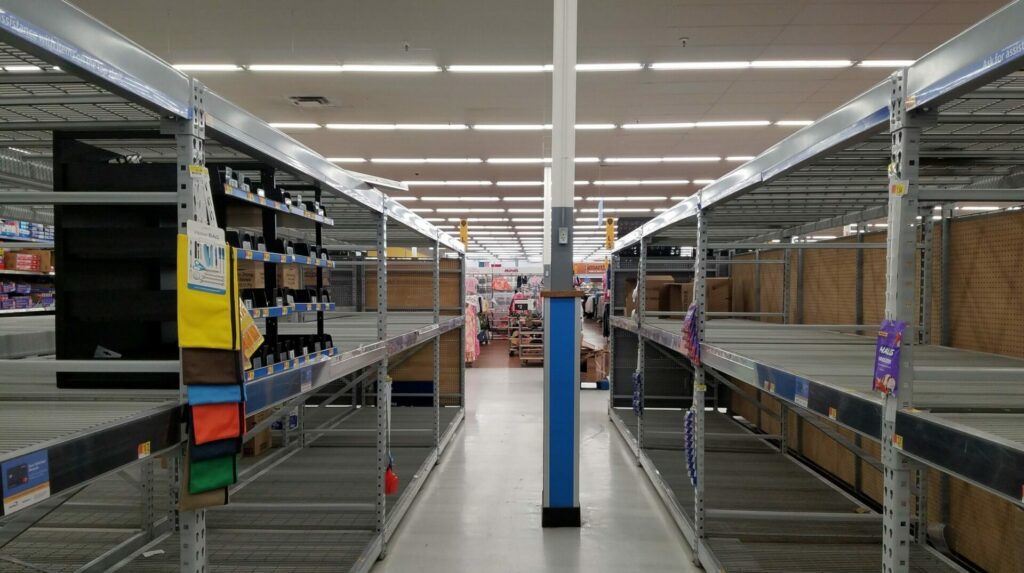
Instead, this situation calls for careful consideration of inventories to ensure a balanced mix of products. The more complex the supply chain, the more critical the inventory management. And as the complexity grows, so does the need for digitization, robust system support, and control.
For today’s companies, it is important to understand where the forecast lies. Keeping tabs on demand has always been valid, but it has now reached a new level of importance. The large expenses of maintaining product inventory heighten the need to align stock levels precisely with customer preferences.
Despite this, a vast majority of supply chain data correction is still today handled manually in Excel or via rigid and rule-based processes in ERP systems. These traditional systems are primarily designed for data input rather than supply chain optimization. This often leads to an accumulation of slow-moving items with irregular and sporadic demand patterns. As a result, businesses face increased costs and inefficiencies.
To maximize the true potential of your inventory, a System of Differentiation (applications dedicated to handling specific business needs to reach a competitive edge) – rather than a System of Record (applications and ERP systems dedicated to handling the most basic and critical data need and processes) – is required.
A smart supply chain planning platform can be tailored to optimize a company’s specific supply chain operations. It leverages advanced algorithms and intelligent automation to provide the insights needed to make informed decisions and take proactive actions.
A modern supply chain planning system will provide a high service level for the end customers by securing the right product mix, while still keeping inventory levels low.
Companies can maintain a high service level not only during peak periods or with high-volume items but also with products sold sporadically. It ensures an efficient operation while keeping inventory levels low or at their optimal point.
By implementing the right system support, businesses can experience remarkable cost savings. On average, stock levels can be reduced by as much as 30%. Imagine the impact that saving such a significant amount of money can have on your bottom line.
Moreover, a smart supply chain planning platform eliminates the need for manual work. Automating time-consuming tasks liberates planners to focus on more rewarding activities, such as proactive risk assessments. This allows them to contribute strategically to the company’s success and drive growth.
To sum it up, your company will benefit from a higher level of service, ensuring customer satisfaction and loyalty. Simultaneously, inventory levels will be optimized, enabling you to strike the delicate balance between meeting demand and minimizing excess stock. Furthermore, the automation provided reduces operational inefficiencies and streamlines your processes, paving the way for increased productivity and profitability.
At Optilon, our expertise stems from a rich 30-year integration heritage, empowering us to seamlessly integrate solutions for production planning, demand forecasting, inventory optimization, and replenishment. With a vast network of 50 supply chain experts in the Nordics, we offer unparalleled support to our clients.
Don’t settle for outdated methods. Contact us today and discover how we can help you transform your business. It is time to step into the future of supply chain planning.
Let us help you unleash the potential of your inventory. Book a meeting today!
Today, supply chain is not only an integral part of most businesses. In the wake of the pandemic, it has proven to be crucial to company success and customer satisfaction. Here are 12 supply chain phrases every company needs to know in the 21st century.
Let us start with the basics: What is Supply Chain? A Supply Chain is a network of organizations, people, activities, information, and resources involved in the production, handling, and distribution of goods and services. It includes all the steps required to create and deliver a product or service – from purchasing raw materials and components – to manufacturing, distribution, and delivery to the end customer.
Supply chain management (SCM) refers to the planning, coordination, and execution of activities involved in the production and delivery of goods and services from the supplier to the end customer. SCM involves managing the flow of goods, information, and finances across the entire supply chain. The goal of SCM is to optimize the supply chain to maximize efficiency, minimize costs, and improve customer satisfaction. Activities include procurement, production, inventory management, logistics, transportation, and distribution. SCM also involves collaborating with suppliers and other partners in the supply chain to ensure that all parties are working towards a common goal.
Value Chain is a concept used in corporate management and strategic planning to describe the various activities carried out within an organization to create value for their customers. A Value Chain consists of several activities. They range from the start of the production process to the delivery of the final product to the customer. The activities in a Value Chain can be divided into primary and secondary activities. Primary activities are those directly involved in the production of a product or service, such as purchasing, manufacturing, marketing, and sales. Secondary activities are those that support primary activities, such as logistics, technical support, and personnel management.
Supply Chain Planning involves forecasting demand, determining purchasing volumes for safety stock, and scheduling production, transport, and distribution of goods and services. It is an important part of Supply Chain Management, as it helps to ensure that the right products are in the right place, at the right time, and in the right quantities.

Learn more about Supply Chain Planning here.
Supply Chain Design involves building an optimal network of organizations, people, activities, information, and resources involved in the production, handling, and distribution of goods and services. It includes strategic decisions for where to place warehouses and manufacturing facilities, how to transport goods, and how to handle the flow of information and resources throughout the supply chain.
Learn more about Supply Chain Design here.
Supply Chain Sustainability aims to reduce the environmental impact and improve the social and economic performance of the supply chain. It includes activities such as reducing waste and emissions, promoting ethical and responsible purchasing, and supporting the well-being of employees and communities. Supply Chain Planning & Supply Chain Design are effective methods for minimizing the environmental impact of waste and emissions.
Learn more about Supply Chain Sustainability here.
Sales & Operations Planning, also known as S&OP, is a process that involves the coordination of sales and operating functions within a company. It involves creating a long-term plan for sales, production, and warehousing and identifying and solving any conflicts or problems that may arise. S&OP helps to ensure that the company can meet customer demand while maximizing efficiency and profitability.
Learn more about Sales & Operations Planning here.
Supply Chain Optimization is the process of improving and simplifying the supply chain by identifying and eliminating inefficiency and improving the flows of goods, services, and information. This can be done through various techniques such as forecasting, warehouse management, logistics, and transport management. The ultimate goal is to increase efficiency, reduce costs, and improve customer service.

A Digital Twin is a virtual representation of real-world supply chain operations. The live data can be used in everything from quality control to inventory management. A Digital Twin can be used by engineering, production, and maintenance teams to experiment with new approaches and what-if scenarios without disrupting the actual production. The data can be fed to Machine Learning predictive models to discover previously unknown operational patterns and aberrations. It can also be automatically input into decision models. A Digital Twin will ultimately help teams explore and understand the key drivers and trade-offs in optimized plans and decisions.
Supply Chain Visibility means having control and insight into the entire supply chain, from suppliers to customers, to make informed decisions and handle any problems or deviations. Businesses can achieve through technology that collects data from relevant sources, such as Enterprise Resource Planning (ERP) Systems, Transport Management Systems (TMS), or Warehouse Management Systems. These can provide real-time data on key figures, such as warehouse product flows and estimated delivery times.
Supply Chain Scenario Planning aims to identify and analyze possible future events and their impact on the supply chain. This involves creating different hypotheses and evaluating how the supply chain would respond to each one. It helps organizations predict and prepare for any disruptions or changes in demand and make well-informed decisions on how to reduce risks and optimize the supply chain. Scenario Planning can also help organizations identify opportunities for improvement and develop backup plans for unexpected events. It is a proactive method for managing uncertainty and risks in the supply chain.
Demand Forecasting is the process of estimating the amount of a product or service that customers will buy. Companies use Demand Forecasting to make well-informed business decisions about how much stock they need, how much they should produce, and what prices to set. It also helps companies identify trends and patterns in consumer behavior and predict changes in demand.
I hope you found these supply chain phrases helpful. In the past few years, supply chain resilience has become a hot topic – and with good reason. To ensure business continuity, mitigate risks, enhance customer satisfaction, improve operational efficiency, and meet regulatory and social expectations, today’s companies need to create future-proof supply chains. How resilient is yours?
Optilon focuses on helping customers utilize their resources where they generate the most value. We are a company founded by engineers that combine world-leading technology with Nordic expertise in supply chain.
Let one of our dedicated supply chain experts help you. Book a meeting today!